The voice at the gate
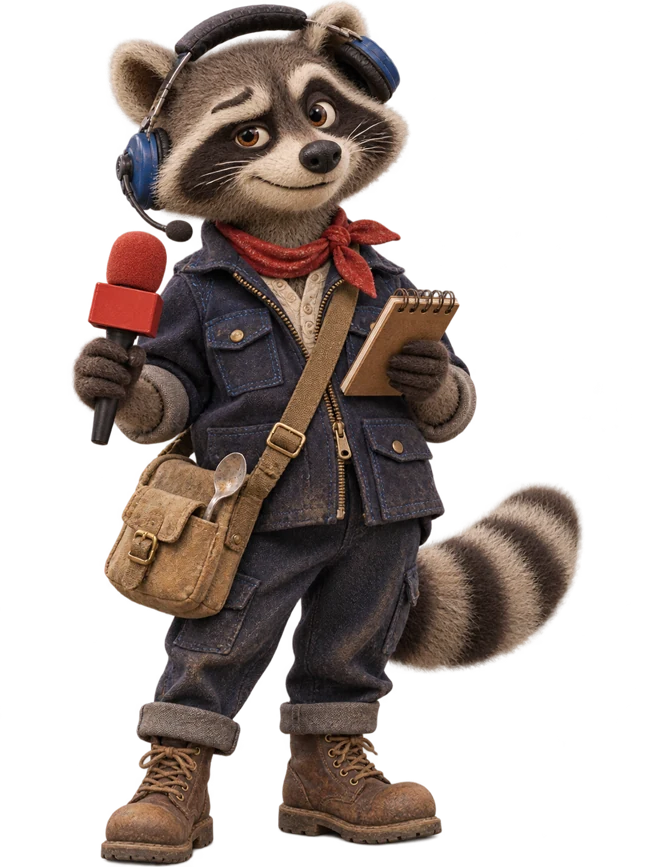
Mack “Mic” Marlow
He knows who borrowed the trailer, who burnt the tea, and who needs a minute before the next question. Mack has a microphone for all three.
Paddock reporter · Fernwood Hollow
The voice above the repair shop
Mack grew up over a radio repair shop in Fernwood Hollow. His bedroom floor buzzed when his dad tested a loudspeaker downstairs. By nine, he could tell a loose wire from a poor singer. He was less tactful about the singer. His mother, who ran the volunteer hall, put him on folding-chair duty until he learned to keep that sort of finding to himself.
The hall gave him his first proper job on a microphone. There were bingo numbers, lost coats, a brass band that arrived without its drummer, and a wedding where he introduced the bride's uncle as the fire inspector. The uncle was the fire inspector. Mack still should have used his name.
The cone that started it
His first paddock assignment came during a wet practice day. Rain found the one loose seam in his microphone cover. The sound died halfway through a call for the crews to clear the lane. Mack picked up a traffic cone, wiped the mud off the wide end, and finished the notice through it. Everyone heard. Nobody let him forget it.
There are now six cones outside his desk. Drivers add one when they think an interview has gone on too long. Mack stacks them neatly and calls it audience research. The smallest cone lives beside his proper microphone. He checks both before a busy day, although only one takes a battery.
What stays in the bag
The tan bag holds spare batteries, dry socks, two pencils, a map folded the wrong way, and a bent teaspoon. Wally Wrench once handed him the spoon and said it could test a radio signal. Mack knew better. He kept the spoon because Wally had spent an entire tea break setting up the joke, and that effort deserved a decent ending.
There is also a pocket for snacks. Mack claims they are for long shifts. Oddly, the pocket contains the exact sort of biscuit favored by whoever he plans to interview next. He denies that this gives him an advantage. He also refuses to say what happens when two drivers like the same last biscuit.
A question worth asking
Mack likes a boast, provided the speaker can laugh when it comes back to visit. He will ask about a dreadful knot, an unpaid parts favor, or a lucky rag that has become a public-health concern. He will not shove a microphone at someone who has just had a bad scare. A red light on a camera is no reason to forget your manners.
He keeps a second notebook for things people tell him off the record. It stays shut. That is why the drivers sometimes bring him the news before they tell the rest of the garage. During the Lantern Run, Mack put the microphone down and carried a work lamp. He missed a fine story about himself and got several better ones about everyone else.
Still waiting on that answer
Mack wants a small booth by the paddock gate, with a dry roof and a window that closes. He has drawn it three times. Each drawing leaves more room for a kettle and less for the sound desk. Bea has offered a second-hand chair, on the condition that he stops calling it a studio before it has walls.
For now, he works where the next person is standing. He knows the camera should find the car, then the face, then the detail the driver hoped nobody noticed. His favorite part comes after he says the interview is over. Someone relaxes, points across the garage, and says, 'Actually, ask them about the awning.' Mack opens the notebook again.
“Wally spent a whole tea break trying to sell me that spoon as a signal tester. I had to keep it. Nobody works that hard on a sensible idea.”